Toray — Material processing pathways

Cutting, joining, and handling change which carbon cloth, tow, or prepreg state belongs in the brief.

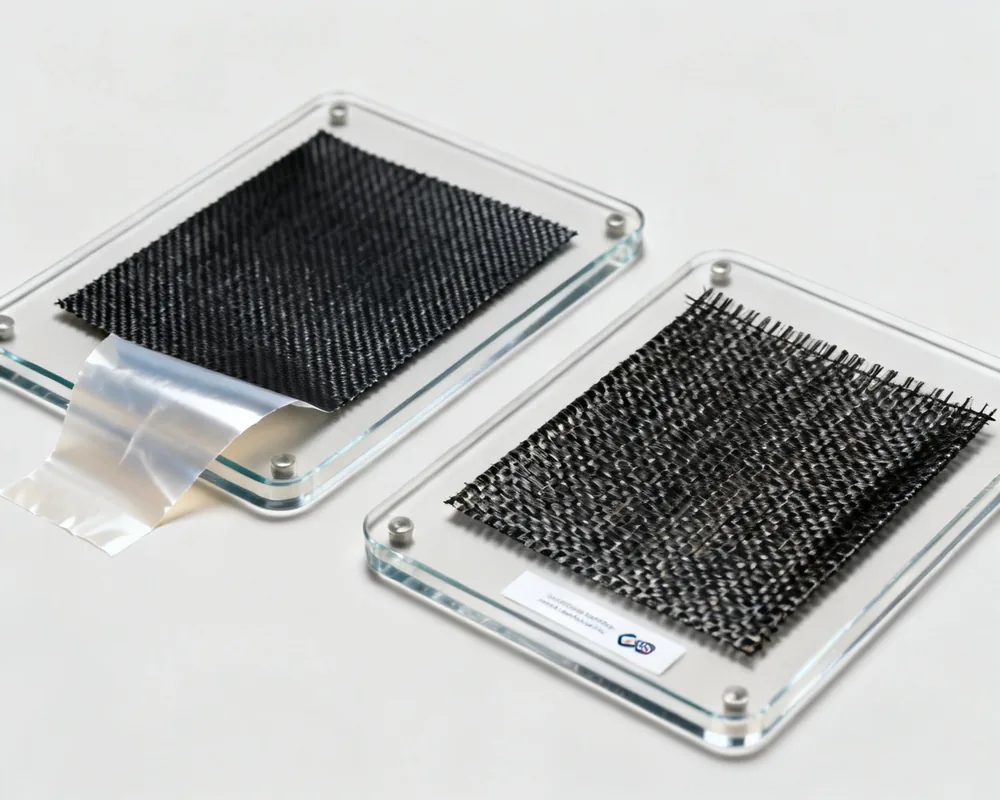
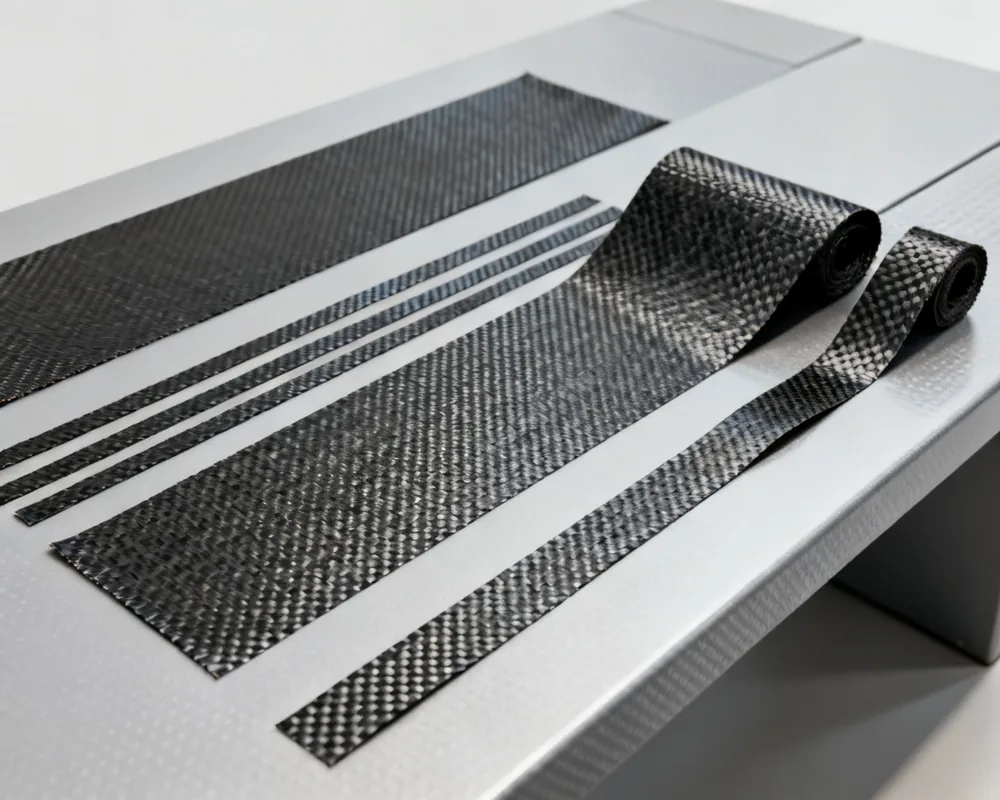
Unbranded carbon reinforcement plies marked for a cutting layout

Material processing pathways

Cutting

Usable width is the cloth you can actually nest, not the full width that includes selvedge or a resin-rich edge. Record the width in cm and whether the figure came from one roll. Areal weight in g/m² and tow size affect how cleanly a ply cuts and how much fraying you should expect on a dry weave. Name the weave construction and whether warp and weft use the same tow. A 3K label means 3,000 filaments; it is not GSM. A prepreg ply adds a tack and a backing-film question that a dry cloth does not have.

If the part is thick, say how many plies and which orientations you intend. That context tells a reviewer whether a heavier cloth, a lighter cloth with more plies, or a stitched multiaxial is the comparison. It does not certify a cutter, a kit shop, or a scrap rate. When the textile is yarn rather than cloth, skip the width field and describe the package and the linear density in dtex or denier. A yarn count is a separate unit and should not be mixed into that field.

A typical reading, not a recorded customer result, starts from a tooling-skin layup that could use dry woven cloth or a resin-filmed textile. The process is to write weave construction, a buyer-set areal-weight target such as 200 g/m², usable width in cm, and the resin state. The result of that reading is a split brief: infusion notes stay with the dry cloth, and tack or storage notes stay with the prepreg. The example creates no stock position, certificate, or measured modulus.
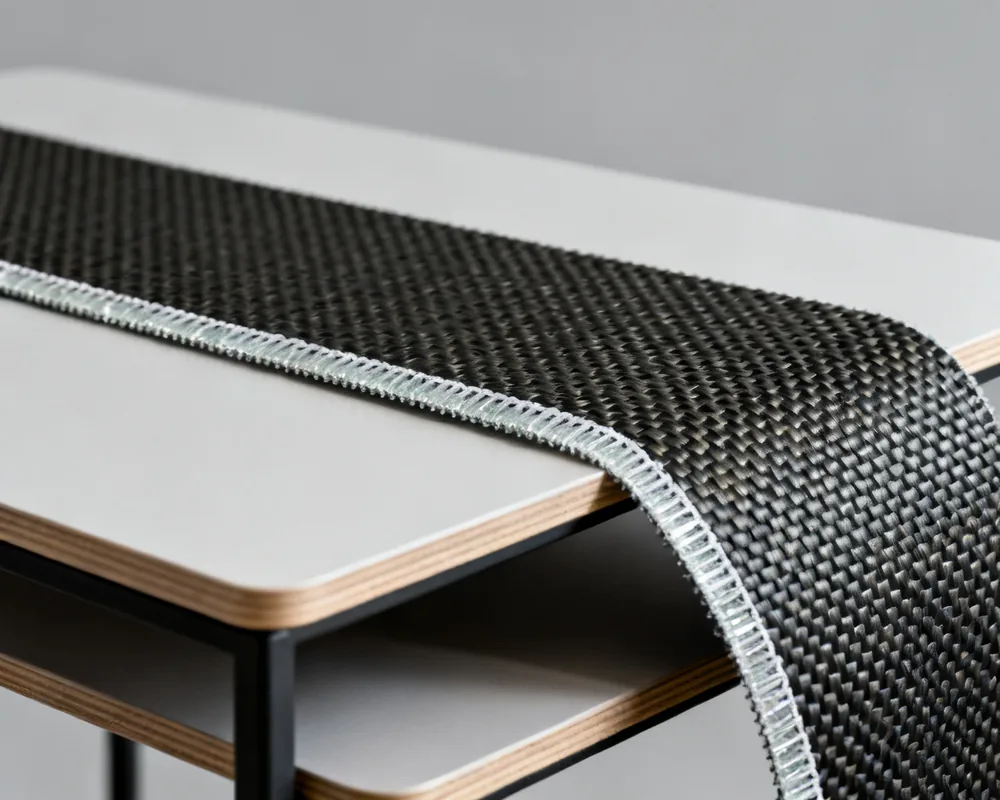
Unbranded reinforcement strips laid out for nesting

Joining

Reinforcement joints are overlaps, splices, stitches, or bonds, not apparel seams. The construction decides the edge: a satin weave, a plain weave, and a non-crimp fabric present different fiber angles at a splice. Ask whether the joint must carry fiber-direction load or hold plies until resin cures. Seam slippage from a clothing test is the wrong method unless someone has shown why it applies. Tensile strength and tear strength each need a named method; neither number replaces the other.

For prepreg, the joining question includes how tack and out-time interact with the layup sequence. For dry cloth that will be infused, the question includes permeability and whether a binder or a coating add-on changes resin flow at the overlap. Lamination, when a film is already in the textile, is a different construction from a coated dry cloth. Write the process you will use. A picture of a finished laminate is not a substitute for that process note.

Fiber family is a tradeoff, not a ranking. Carbon and other synthetic fibers are in view when stiffness along the fiber is the design driver. A natural-fiber reinforcement, if the brief proposes one, is discussed for the handling and moisture behaviour that brief names. Neither side is an environmental verdict. A stock reference and a custom development are different again: stock needs the batch and date you can verify, and custom development needs a sample checkpoint before any bulk conversation. This page does not state which route is open. Abrasion resistance of a cured surface and the hand of a dry cloth are also separate targets; one does not stand in for the other.

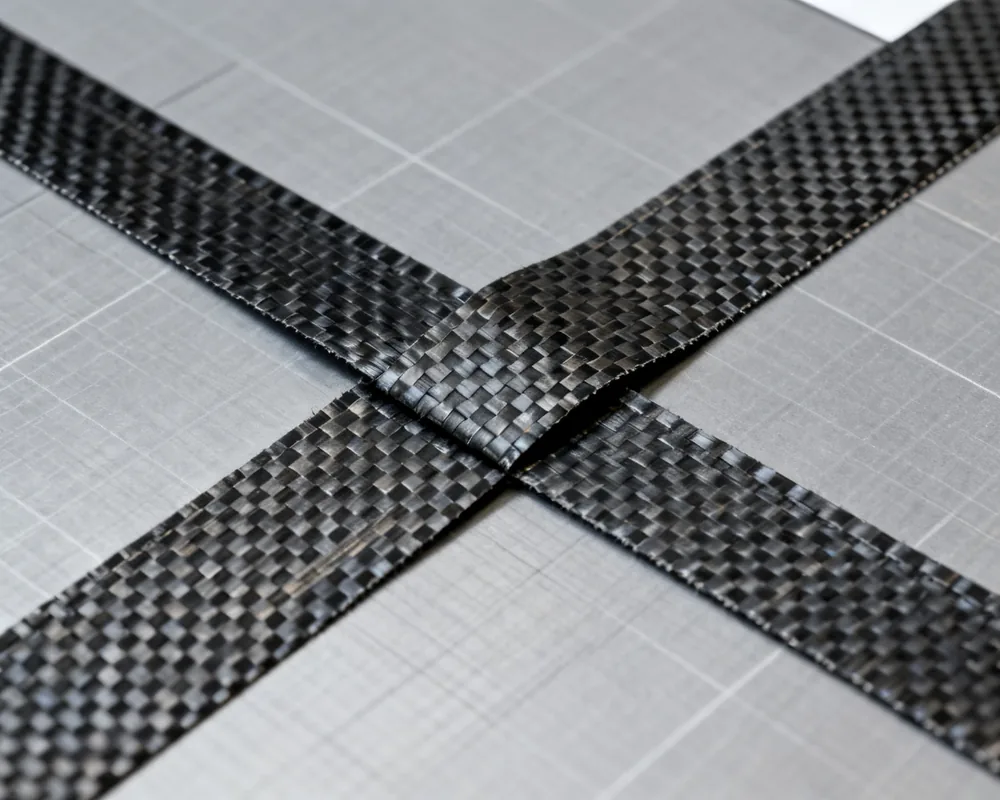
Unbranded overlap splice in a carbon reinforcement ply

Care

Care for these materials means handling and storage, not a wash cycle. Dry carbon cloth should be kept free of contamination that would block wet-out. Prepreg needs its stated storage condition and a clear note of the sample state you are holding: frozen, thawed, or already staged. If you do not have that condition, do not invent a shelf life.

Appearance care is secondary unless the laminate surface is specified. Then record the peel ply, the tool side, and the weave that will show. Abrasion resistance of a cured part is a later coupon question and should not be copied from a textile pilling method. Colorfastness, lab dip, shade band, stretch recovery, and dimensional stability stay out unless that surface specification asks for them. Send the pathway that is actually open: cut width, joint type, or storage state. Three limits apply: this page states no shelf life, no scrap rate, and no certificate.

Unbranded prepreg and dry cloth samples on a laboratory tray

Match the use before the material label

An application page is a way to frame the environment, the stress and the assembly question. It is not a list of completed installations. Describe contact, exposure, care and processing separately, then ask which evidence belongs to that condition.

Use conditions to separate in the brief
ConditionQuestionEvidence context
Daily contactWhat touch, care and surface change matter?Physical sample and the stated care context
MoistureIs the question liquid resistance or vapour movement?Method and specimen conditioning
AssemblyHow will the textile be cut or joined?Construction and usable width
ColourWhich physical reference is under review?Shade approval notes, not a screen swatch

Describe the use environment

Tool contact, joint load, and storage state make a reinforcement brief specific.

Discuss your fabric requirements